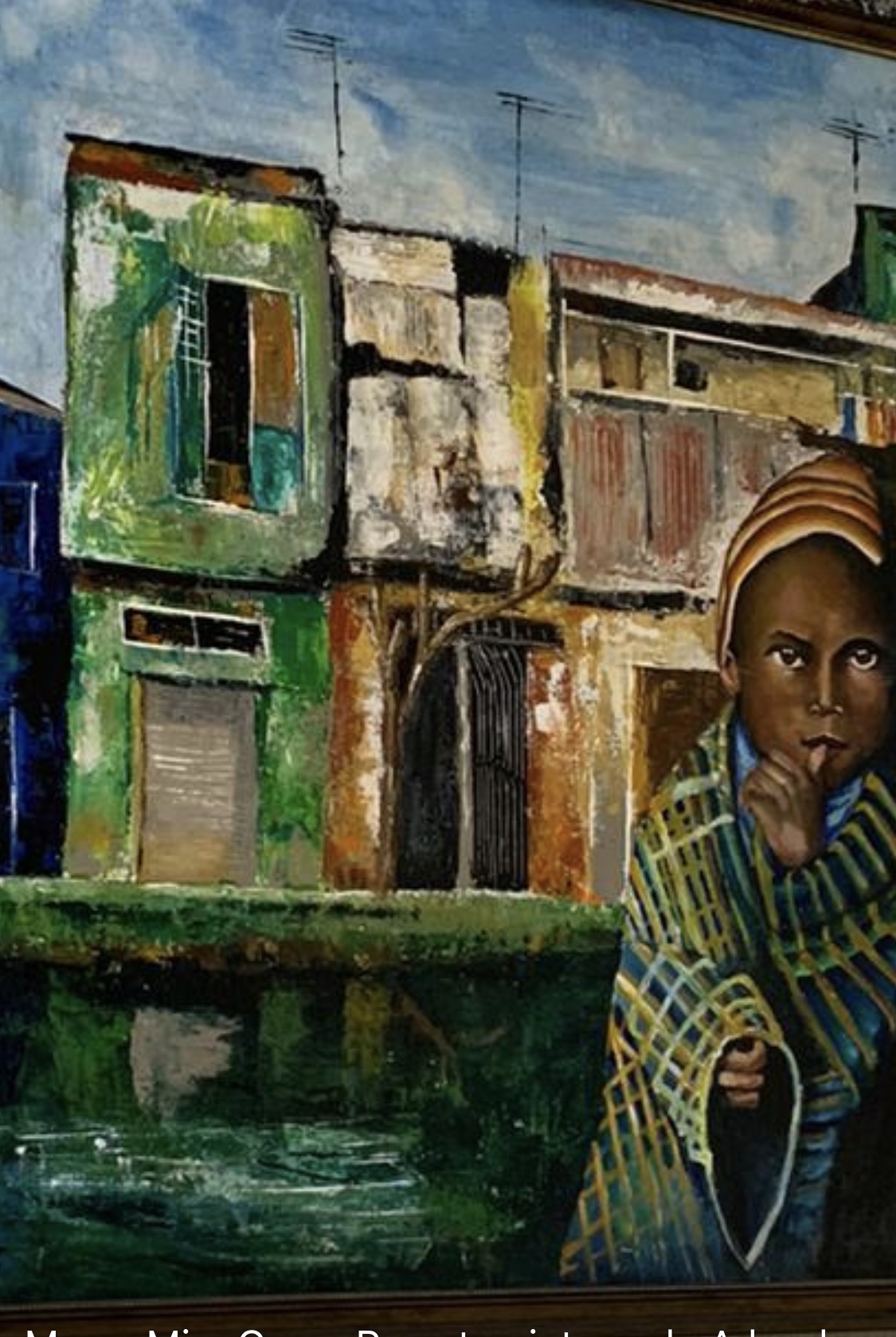
My work this semester I focus on creating portraiture. I use painte and drowing techinique to fix the model gaze and try to perserve their dignity. Simultaneaously I make evidente the fragility of their being. The face can represent the human condition. My portraits position the gaze as space of contradiction and ambiguity. The portraits are subjects chose to have emotional, culture and political conflicts.
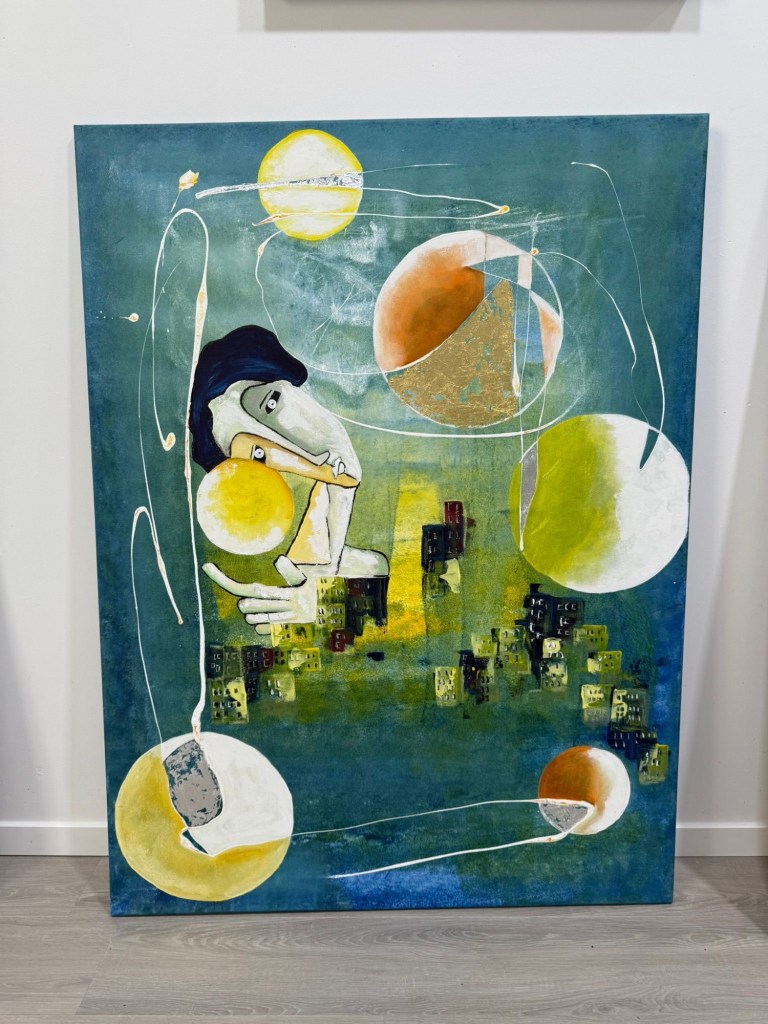
“Somewhere between science and fantasy lives this version of Venus… my own vision, stitched together with magic. A place with moons that never existed, a little house that feels like home, and skies only a brush could create. Not reality, but the world I’d like to wander in.”
“En algún lugar entre la ciencia y la fantasía vive esta versión de Venus… mi propia visión, tejida con magia. Un lugar con lunas que nunca existieron, una casita que se siente como hogar y cielos que solo un pincel podría crear. No es la realidad, sino el mundo en el que me gustaría perderme.”
“La voz de la infancia fragmentada no se silencia, sino que rebrota en cada trazo.”
La pintura explora cómo la pobreza y la violencia pueden romper la continuidad de la niñez. Está inspirada en datos reales: por ejemplo, UNICEF advierte que 333 millones de niños viven en pobreza extrema, privados de sus necesidades básicas . El artista representa esa realidad mediante rostros infantiles entrelazados con elementos simbólicos (juguetes rotos, letras desvanecidas, fragmentos de periódicos), dispuestos como piezas de un rompecabezas inconcluso. Los tonos contrastantes –zonas luminosas junto a áreas en sombras– sugieren la dualidad de la memoria y el trauma. Según la UNESCO, la pobreza infantil significa “vidas acortadas y duras” ; Infancias Fragmentadas visualiza esa brutalidad pero también la resistencia, invitando al público a reflexionar sobre la urgencia de proteger la niñez. La obra llama a reconstruir lo perdido y a reconocer la dignidad inherente a cada niño, aun en situaciones extremas
Infancias Fragmentadas reflects on childhood interrupted by social injustice. I was inspired by real-world data – for instance, UNICEF notes that 333 million children live in extreme poverty . Such deprivation can mean that childhood is “experienced very differently… surrounded by poverty, enduring hunger, child labor or war” . According to UNESCO, poverty implies “shortened and harsh lives… deprived of dignity” , and this painting gives a voice to those silenced experiences. Using mixed media, I fragment images of children and overlay symbolic elements. Each brushstroke and torn photograph piece is meant to represent their resilience and unanswered questions. I strongly believe that imagery has the power to move people; through this work I aim to evoke empathy and reflection, hoping viewers will acknowledge the importance of protecting every child’s innocence.
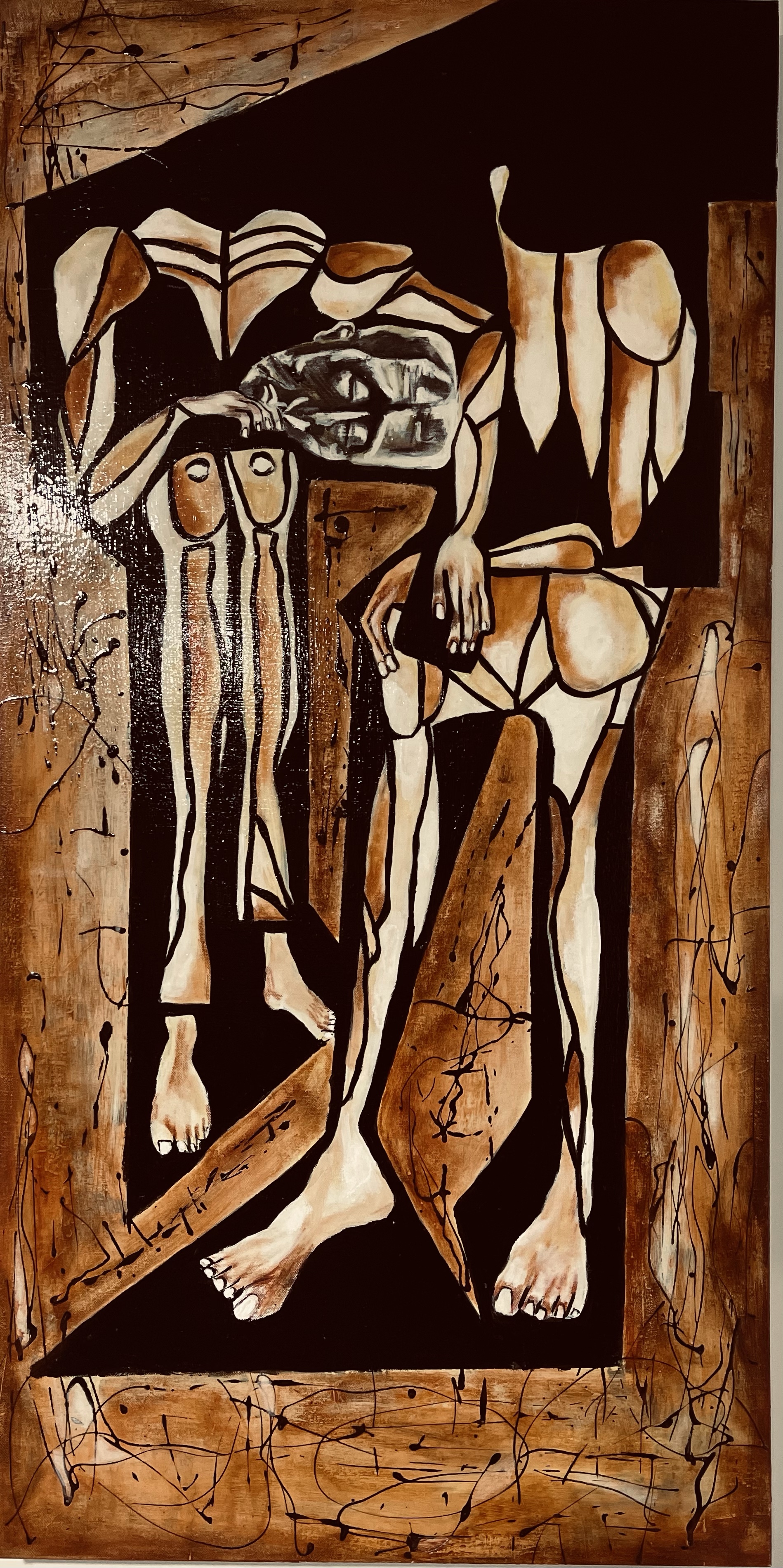
Beyond its rejection of traditional perspective, Cubism emerges as a deeply expressive language—especially in its treatment of the human body. By deforming and fragmenting anatomy, Cubist artists do not seek realism, but emotional resonance. Sharpened elbows, angular shoulders, and fractured faces echo internal suffering. Geometry becomes a cry; each broken plane mirrors the ruptures of the modern psyche. In this disarticulated body, we encounter a portrait of existential anguish—a reflection of the fractured human experience in the 20th century.
ESPAÑOL
Más allá de su ruptura con la perspectiva tradicional, el cubismo se convierte en un lenguaje profundamente expresivo, especialmente en su representación del cuerpo humano. Al deformar y fragmentar la anatomía, los artistas cubistas no buscan el realismo, sino la resonancia emocional. Codos afilados, hombros angulosos y rostros descompuestos evocan un sufrimiento interno. La geometría se vuelve grito; cada plano roto refleja las fracturas de la psique moderna. En este cuerpo desarticulado encontramos un retrato de la angustia existencial: un reflejo de la experiencia humana fracturada del siglo XX
Serie2
Serie 3/4
Visual artist with a cubist approach. Acrylic and colored pencil on canvas to explore identity, memory, and form from multiple viewpoints.
Artista visual con enfoque cubista. Acrílico y lápiz de color sobre lienzo para explorar identidad, memoria y forma desde múltiples perspectivas.
The abstract representation of spiritual flight through the composition of birds and nature is a deeply symbolic artistic form that honors the passage between life and death. This form of art seeks to reflect not just a moment of transformation, but also a celebration of the soul and its eternal journey. In this visual ode, every element—birds, insects, colors, landscapes—comes together to tell a story of connection with the eternal.







 PIOLINART