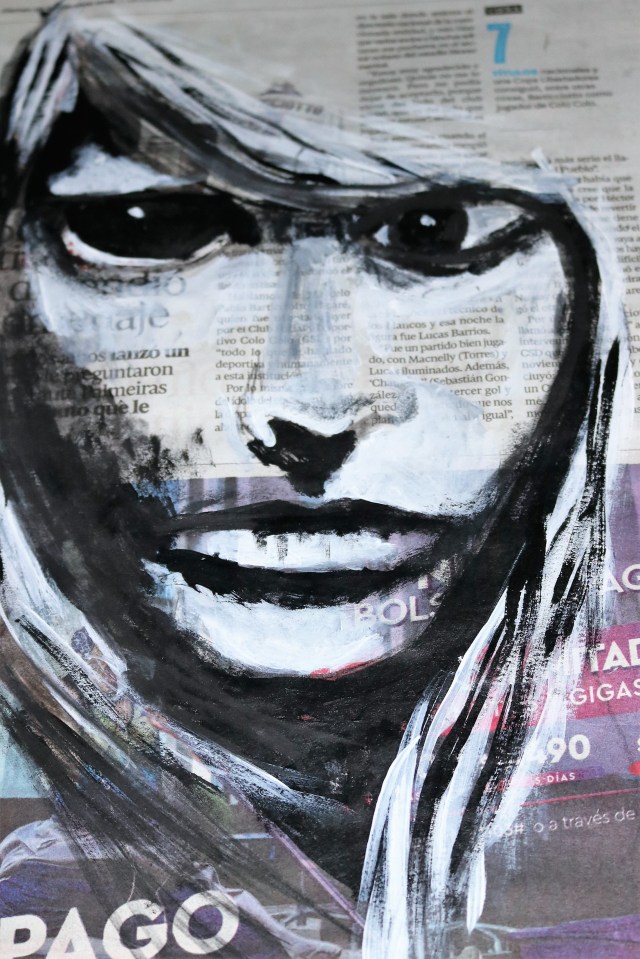
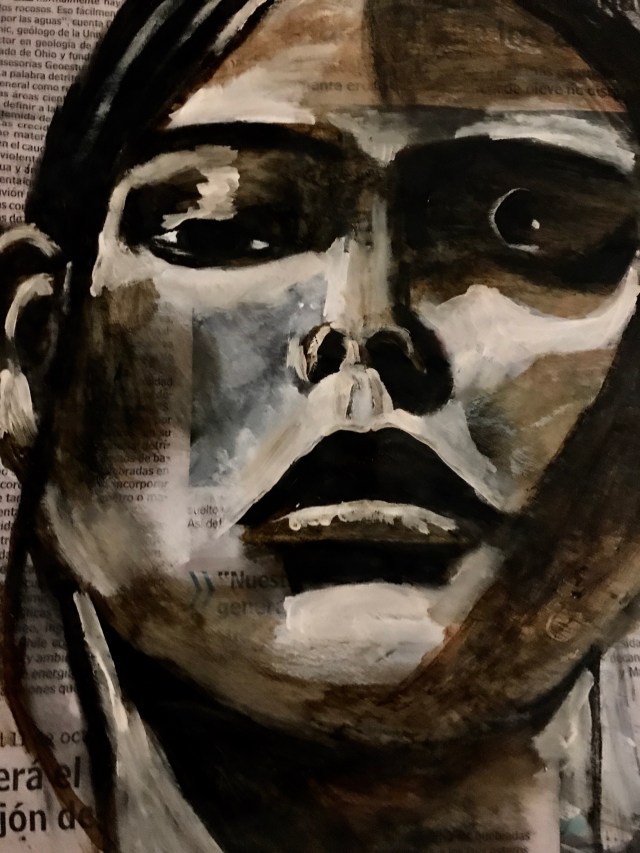
My work this semester I focus on creating portraiture. I use painte and drowing techinique to fix the model gaze and try to perserve their dignity. Simultaneaously I make evidente the fragility of their being. The face can represent the human condition. My portraits position the gaze as space of contradiction and ambiguity. The portraits are subjects chose to have emotional, culture and political conflicts.
PROPOSAL
“For me, painting is the sad and dark point of life. In it I try to express the deepest of the human being. While the upholstery is the happy part of life.”
Violeta Parra 1953.
Faces reveal expression impossible to hide, our eyes are mirrors of the soul, they are silent voice which wants to escape, and I make dormant in my drawing, the observer uncovers your own hidden reality, at a glance, quiet and full of emotions that invites us to be aware that we share a common, destiny. those headaches are also ours, and that many times we can witness the death with the eyes open.
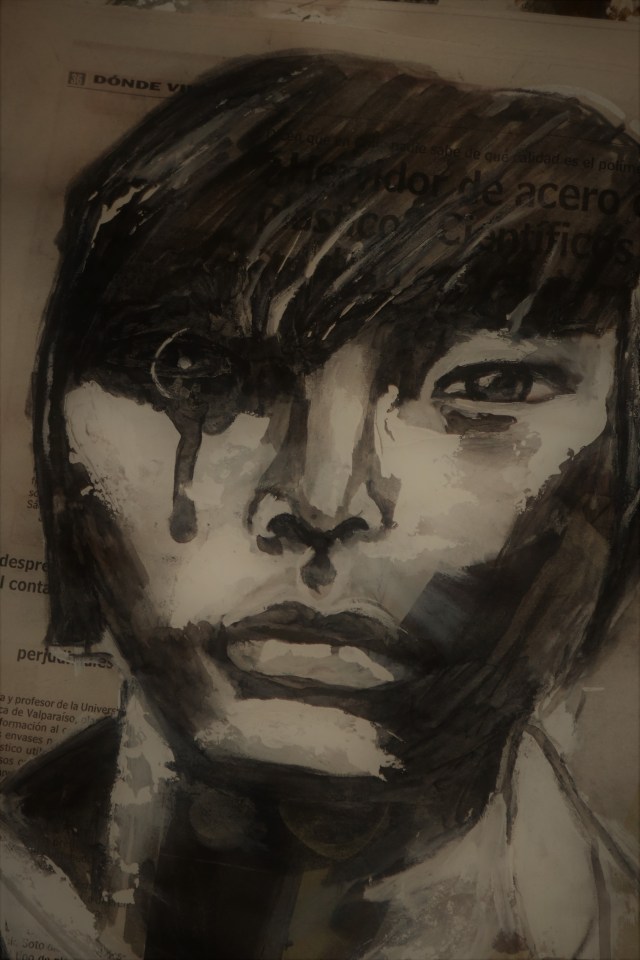
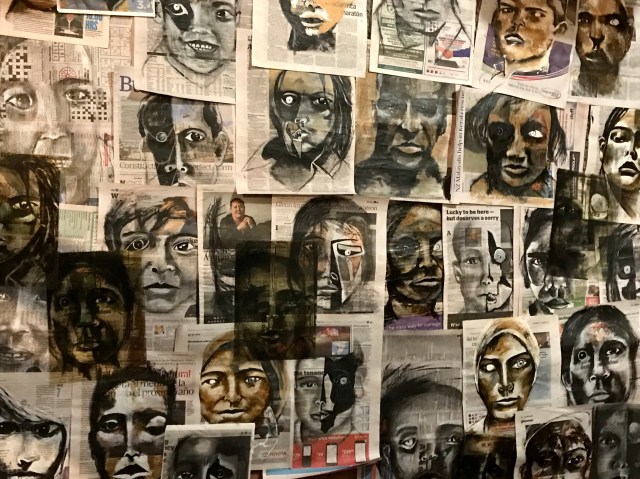
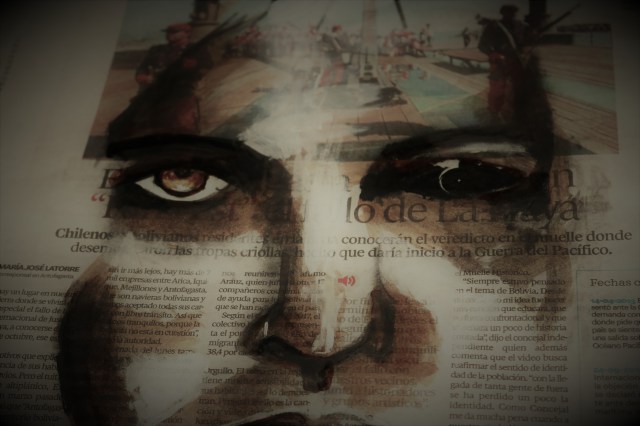
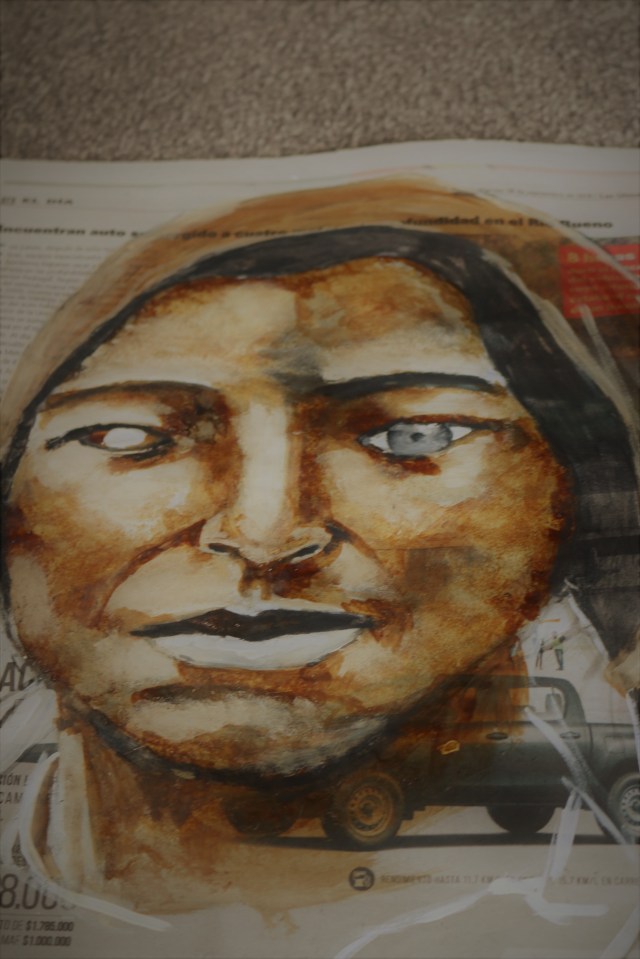
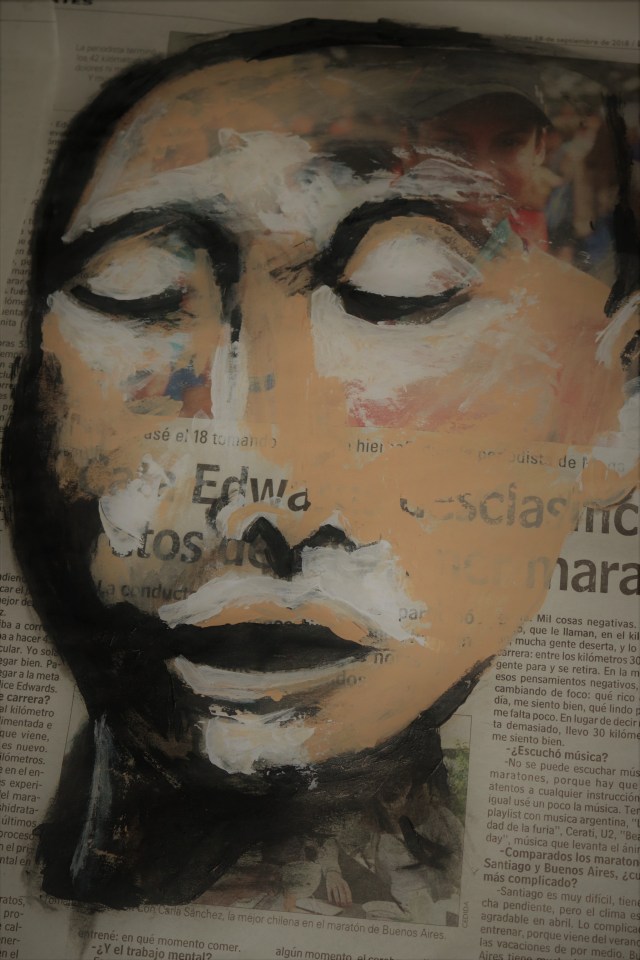
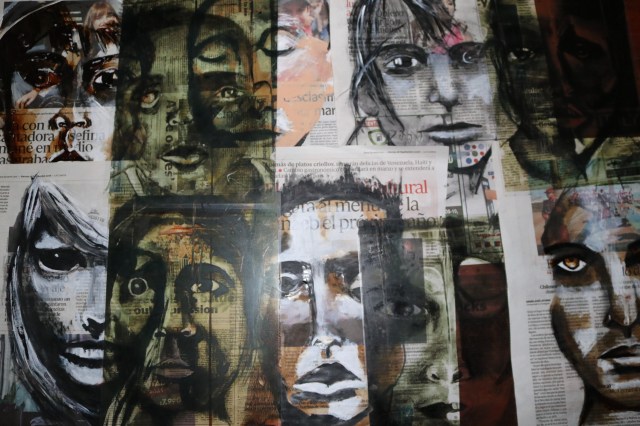
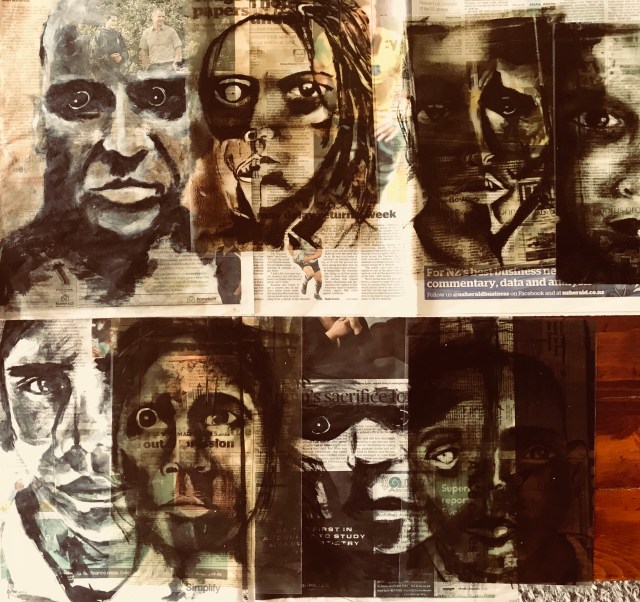
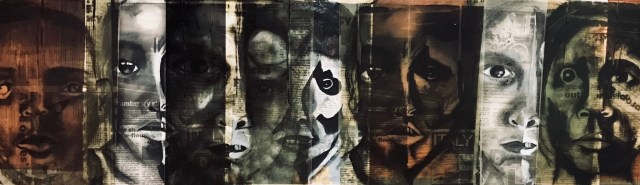
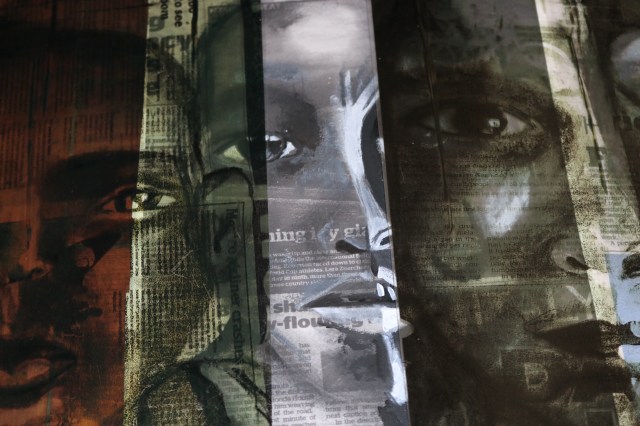
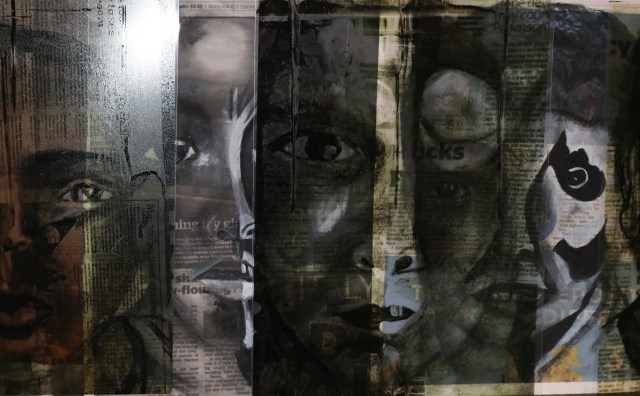
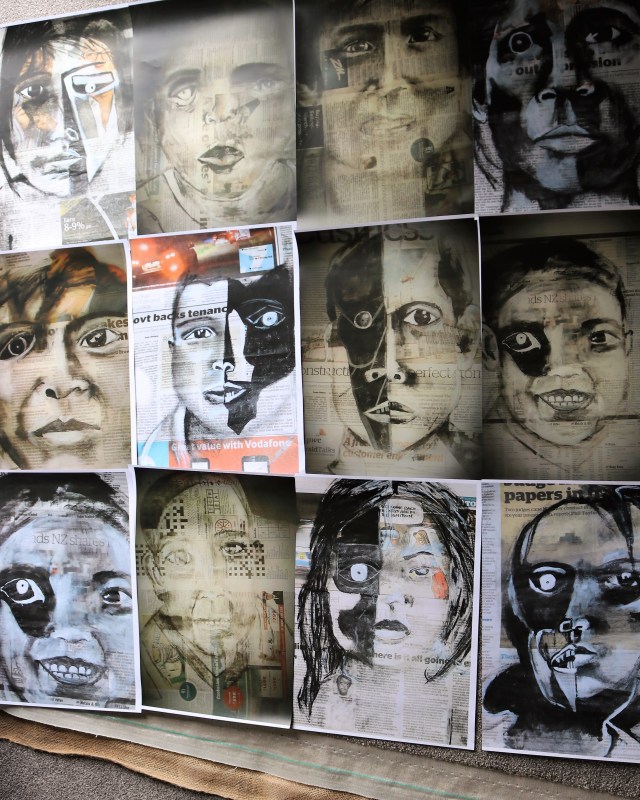
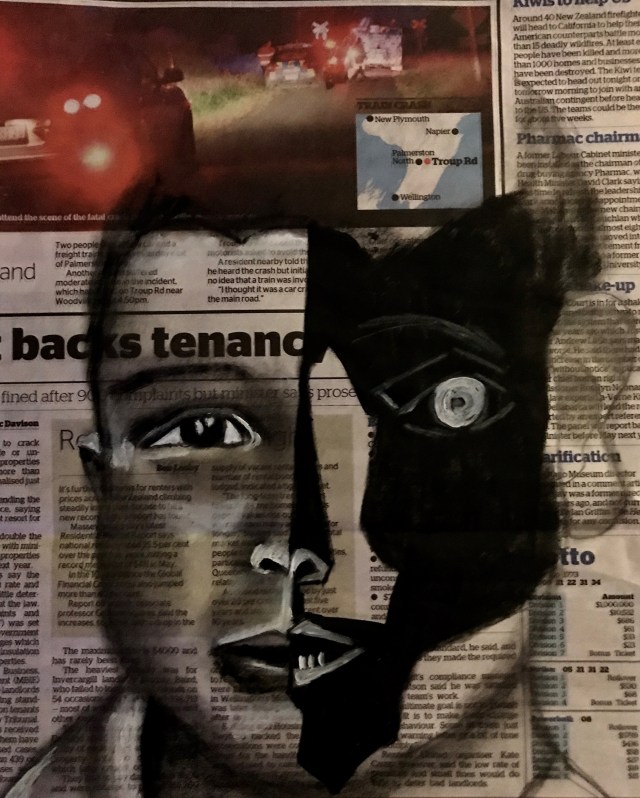
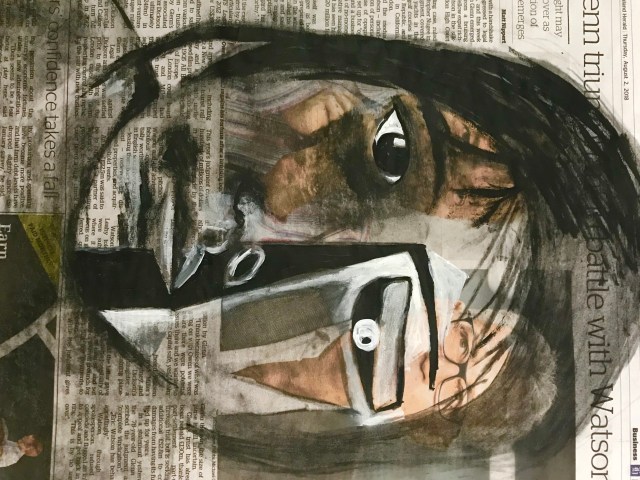
We can observe a compilation of black and white sketches, looking for simplicity and emphasis of each face. drawn in newspapers to connect the information and daily events in part of the life of each portrait. We can find different sizes, installed on a wall to invoke their individual history, like an altar. Raising questions about the absent and present and the brevity of the memory of each individual
In this series of portraits, they are focused on the disappearance of children, which occurs daily, across the world and which have been fatally found. Using photographs used by relatives to find them. Raising two points of view, one is what the photographer captures and the other is the reality and the destiny that these children had.
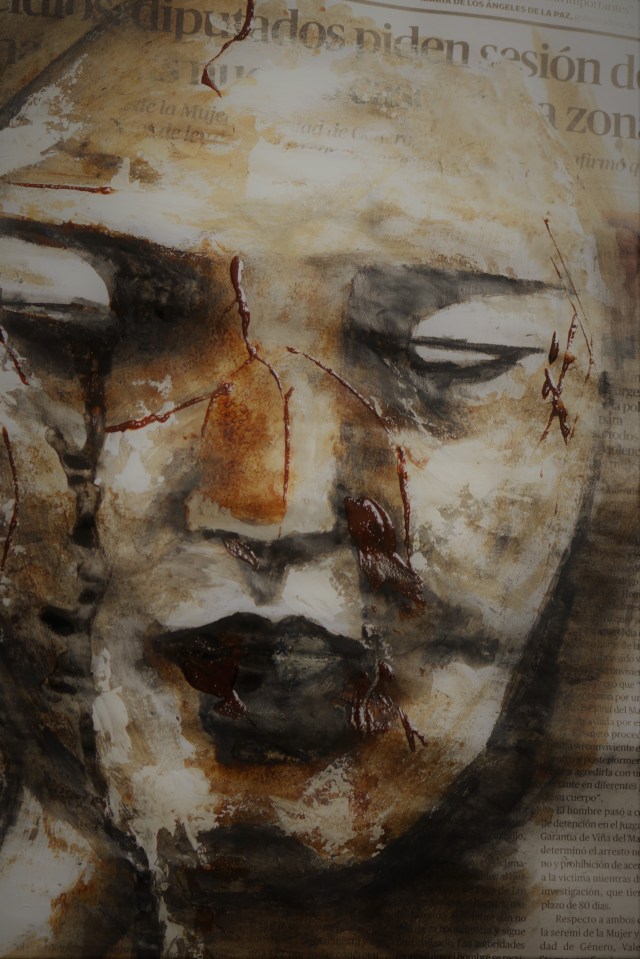
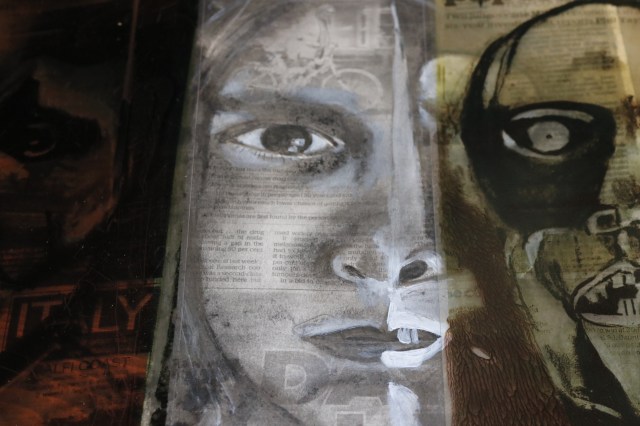
Each portrait has a different distortion according to the circumstances of each case, often grotesque and dark, to give a sense of greater anguish and at the same time show a vision of a more desperate world, evoked in the faces by tragic and ambiguous episodes, turning them into victims, not only of third parties but of oblivion. Each viewer is invited into a reflection on the fragility of Innocence and the capacity for cruelty and coldness of each human being as a cry for help through each sketch. An infinite silence of those who no longer have a voice. Be printed on those posters so fragile that time was defoliated and burned like autumn leaves. Faces manipulated by time, scratched and shattered like oblivion itself. It is the need for perpetuity, because somehow, we all want to stay. Death is a tragic destiny of man and, why not say it, that which erases his identity, his individuality from the face of the earth and the memory of those who remain alive.
at the beginning of these sketches, different ideas of the execution and development came, today I only have reflections.
One of those first ideas was the modification for each face, the answer was emerging from reading each story of many missing children and they are happening to every moment, and perhaps now that I try to understand this happening again, an eternal darkness for beings so innocent, and try to represent them in dark spots and incomplete drawings, like their history. dark sketches like their lives and that of their loved ones that continue an eternal pilgrimage and search, full of laments and whispers. I also put to life with two faces one darker sometimes and others like a voracious stain invading the face, a metaphor of our dark sides or shadows? you do, but my great reflection is the ability of each one to ignore the other and only continue to see one side with our lives without imagining that the other we could become the reflection of a mirror and we could at some point, wake up and find ourselves there, where we do not want to be where there is no security. life has two faces and sometimes more, but there are so innocent beings living always an eternal darkness, what will I do so that this does not happen? you want nothing but I cannot turn and see, so I will start with expressing it in this work and you would like to raise awareness, so that he wants to turn and not be afraid of really learning to observe.
every time there are more and more children who disappear and maybe I would miss life to be able to portray each of them because in the second I was doing at that same moment a child would disappear again. I only have to produce a few in a symbolic way so that we do not forget that this happens and exists and we do not try to distract a reality. my drawings are so ambiguous but at the same time so dark and life continues full of news that occupies a page of the newspaper, but what is happening the news that is current not so the past forgotten and buried. I do not speak of a distant past many times but of a recent past. Every day we are less connected to the other less with their pain and disregard as a human being.
A panel of drawings an altar full of images of pain and anguish of their families many times of fatal results. Maybe in an illusive way I look for its perpetuity or just manifest my dissatisfaction with so much silicon
DISAPPEARED (MARIO BENEDETTI)
They are somewhere / arranged
puzzled / deaf
looking for / looking for us
blocked by the signs and doubts
contemplating the gates of the squares
the doorbells / the old roofs
ordering their
dreams your forgetfulness
maybe convalescing from his private death
nobody has explained them with certainty
if they left or if not
if they are banners or tremors
survivors or responsos
they see pass trees and birds
and they ignore to what shadow they belong
when I start
to disappear
three five seven ceremonies ago
to disappear like without blood
as faceless and without reason
they saw through the window of his absence
what was left behind / that scaffolding
of hugs sky and smoke
when they started to disappear
as the oasis in l
the mirages
to disappear without final words
they had the pieces in their hands
of things they wanted
they are somewhere / cloud or grave
they are somewhere / I’m sure
there in the south of the soul
it is possible that they have lost the compass
and today wander
asking
where the fuck is good love
because they come from hate
“I look through the thick and cold fog, and there are these static shadows, that has remained for the passage of time, alive even by a creek that is full of drops. They produce sounds that I manage to perceive. Smooth infinite sound, eternal as the grief of the forgotten but does not stop crying. They were taken away We love them. It encloses me, and I choke, and I feel my eyes explode, and I only have one shadow left, that although it is black and thick, a circle of light lets me breathes.”
Paola Garcia Casanova
Project Proposal
CONCEPTS/IDEAS
We can observe a compilation of black and white sketches, looking for simplicity and emphasis of each face. drawn in newspapers to connect the information and daily events in part of the life of each portrait. We can find different sizes, installed on a wall to invoke their individual history, like an altar. Raising questions about the absent and present and the brevity of the memory of each individual
In this series of portraits, they are focused on the disappearance of children, which occurs daily, across the world and which have been fatally found. Using photographs used by relatives to find them. Raising two points of view, one is what the photographer captures and the other is the reality and the destiny that these children had.
Each portrait has a different distortion according to the circumstances of each case, often grotesque and dark, to give a sense of greater anguish and at the same time show a vision of a more desperate world, evoked in the faces by tragic and ambiguous episodes, turning them into victims, not only of third parties but of oblivion. Each viewer is invited into a reflection on the fragility of Innocence and the capacity for cruelty and coldness of each human being as a cry for help through each sketch. An infinite silence of those who no longer have a voice. Be printed on those posters so fragile that time was defoliated and burned like autumn leaves. Faces manipulated by time, scratched and shattered like oblivion itself. It is the need for perpetuity, because somehow, we all want to stay. Death is a tragic destiny of man and, why not say it, that which erases his identity, his individuality from the face of the earth and the memory of those who remain alive.
The series of portraits has had a great influence, not only on personal experiences, but on great artists who, in one way or another, through different branches of the arts, have pursued a change, as does Joel Flores, a Mexican writer in one of his works, “Never again your name” (2017) is a novel to pay off debts, clear ghosts as an equation that should give the right result or something will be ruined forever, but also about how a writer is made and the decisions he must make consequently, he must survive in a country where it is not possible to eat what is written. It is also a story about what happens in newsrooms, when the fourth power stretches the mendicant hand to official advertising. It is, in a very painful way, a story about the violence that has not stopped beating our country and that has not ignored a single city or town of the national territory, filling them with the dead and disappeared. It provokes in me the need to find a way to produce images. a visual provocation a cry for help that we cannot ignore. Finding another way to express the same idea and produce the same result.
OBJECTIVES
This week I continued with the face modification in general
Very influenced by the cubist style that I had already experienced last year but this time only half of the face, each modification is influenced by the disappearances and many times found Dead in a horrible way, and after a long time. What makes me think about the shape of the photograph and the destiny of each one as different as seen in the photograph and looking for some way to portray the two faces of that photograph reminds me a lot of the masks that were used for funerals in rituals and ceremonies, which were often illustrative with stories and meaning as symbolic and I think it is the best way to reproduce the other half of their faces. http://www.precolombino.cl/exposiciones/exposicion-permanente-america-precolombina-en-el-arte/mesoamerica/vitrina-mascaras-y-mascaretas/
PROCESS
I have produced a series of portraits that have evolved week after week, at first, they were just simple drawings with some alterations with a marked style like cubism. After that I was focusing on the alterations trying to follow the Picasso line, after some experimentations like the transparency of the newspaper to a high quality paper like the use of acetone after scanner of the newspaper and continuing the use of transparent sheets and modification of the tones, because it seemed not really deep the contrast due to the problem of the quality of the paper of the Newspaper. Many questions came to me because, as the transparency of the image did not seem honest to the intention of the Project itself, after a series of experiments it returned to my essence since I started to draw the use of other components such as It is brown to produce the sepia tone and the drawings are not drawn with pencil strokes but with my fingers and stains producing something more physical in the development of the sketches, finding more depth and more tonality over time.
RESEARCH
The ideas that have helped me face research and the validation of the use of photographs plus technical concepts and experimentation are the following:
BIOGRAPHY
AUMONT, J. El rostro en el cine. Barcelona:
Ediciones Paidós Ibérica, S.A., 1992.
BERGER, J. Otra manera de contar. Barcelona:
Gustavo Gili, 2013.
BERGER, J. Sobre el dibujo. Barcelona: Gustavo Gili, 2011.
CALVO, C. Carmen Calvo : [exposición] Institut Valencià d’Art Modern, 29 noviembre 2007 – 20 enero 2008 (Catálogo). Valencia: IVAM, 2007.
FRANCASTEL, Galienne y Pierre: El retrato. Madrid:
Cátedra, 1978.
GOMBRICH, E.H. Historia del Arte (16ª Edición).
Madrid : Phaidon, 2010.
GOMBRICH, E. H. “La máscara y la cara”, Arte, percepción y realidad. Barcelona: Paidós, 1973.
LATORRE IZQUIERDO, J. The Art of Photography: Towards an Aristocratic Vision. Communication & Society Navarra: 2000.
LUC-NANCY, J. La mirada del retrato. Buenos Aires:
Amorrortu, 2006.
MARTÍNEZ-ARTERO, R. El retrato: Del sujeto en el
retrato. Barcelona: Montesinos, 2004.
WILLIAM,A.E. El rostro humano: el nuevo retrato fotográfico. Barcelona:
http://www.paulchiappe.com
DAYLY MAIL ONLINE, Small wonders: The tiny pencil portraits made to mimic Victorian-era photographs, Entrevista a Paul Chiappe
Biography
In his drawings and animations, William Kentridge articulates the concerns of post-Apartheid South Africa with unparalleled nuance and lyricism. In the inventive process by which he created his best-known works, Kentridge draws and erases with charcoal, recording his compositions at each state. He then displays a video projection of the looped images alongside their highly worked and re-worked source drawings. In this way, his process and aesthetic concerns are inextricably linked with the narrative power of his work, as in his “Nine Drawings for Projection” series (1989-2003), which depicts two fictional white South Africans navigating the ambiguities of contemporary South Africa. With his highly personal and often quiet works in seeming tension with the brutality of his content, Kentridge expresses a profound ambivalence about his native country.
Biography
Ellen Gallagher’s minimalist paintings, collages, and films examine the development of African-American stereotypes. The artist Incorporates pop culture ephemera into her work, particularly postwar-era advertisements for hairstyles, wigs, and skin products targeting African-American women. In her “DeLuxe” series (2004–05), Gallagher embellished images of hair-straightening and skin-whitening advertisements from magazines such as Ebony and Sepia. Viewed as intricate abstractions from afar, “DeLuxe” examines formal ideas about materials, seriality, and process alongside its narrative of race. Recurring elements in Gallagher’s work include minstrel-like lips, the use of penmanship paper and other found materials applied to canvas, and surfaces transformed to illegibility by methods like smudging, staining, and puncturing.
Related Categories
Identity Politics,Racial and Ethnic Identity,Contemporary Art,New York Artists,Women Artists,Engagement with Mass Media,20th Century Art,Appropriation,Grid,Traces, Indexes, and Implied Presence,Repetition,United States,Work on Paper,Contemporary Surrealistic,Collage,Film/Video,Contemporary Conceptualism,Erased and Obscured,Mixed-Media,Collective History,Human https://creators.vice.com/es/article/53kb9z/distorsiona-la-realidad-y-el-rostro-humano-con-la-instalacion-digital-de-sehsucht
Vick Muinz – Brazilian:
• https://www.jpost.com/Arts-and-Culture/Arts/Material-man-350071
TECHNIQUES
I have also reviewed some works of Pablo Picasso and some form into distortion and use of newspapers.
“For me, painting is the sad and dark point of life. In it I try to express the deepest of the human being. While the upholstery is the happy part of life.” Violeta Parra 1953.
Faces reveal expression impossible to hide, our eyes are mirrors of the soul, they are silent voice which wants to escape, and I make dormant in my drawing, the observer uncovers your own hidden reality, at a glance, quiet and full of emotions that invites us to be aware that we share a common, destiny. those headaches are also ours, and that many times we can witness the death with the eyes open.
We can observe a compilation of black and white sketches, looking for simplicity and emphasis of each face. drawn in newspapers to connect the information and daily events in part of the life of each portrait. We can find different sizes, installed on a wall to invoke their individual history, like an altar. Raising questions about the absent and present and the brevity of the memory of each individual
In this series of portraits, they are focused on the disappearance of children, which occurs daily, across the world and which have been fatally found. Using photographs used by relatives to find them. Raising two points of view, one is what the photographer captures and the other is the reality and the destiny that these children had.
Each portrait has a different distortion according to the circumstances of each case, often grotesque and dark, to give a sense of greater anguish and at the same time show a vision of a more desperate world, evoked in the faces by tragic and ambiguous episodes, turning them into victims, not only of third parties but of oblivion. Each viewer is invited into a reflection on the fragility of Innocence and the capacity for cruelty and coldness of each human being as a cry for help through each sketch. An infinite silence of those who no longer have a voice. Be printed on those posters so fragile that time was defoliated and burned like autumn leaves. Faces manipulated by time, scratched and shattered like oblivion itself. It is the need for perpetuity, because somehow, we all want to stay. Death is a tragic destiny of man and, why not say it, that which erases his identity, his individuality from the face of the earth and the memory of those who remain alive.
“I look at you, I look at you without getting tired of looking and what a cute child I see your eyes appear.”
Gabriela Mistral
Reflection this week
Each drawing is an eternal and gloomy cry, in an infinite silence of those who no longer have a voice. Being printed on those posters so fragile that time was defoliate and burning like autumn leaves. Faces manipulated by time, scratch and shattered like oblivion itself. It is at that moment that I feel the need to make them perpetual, because somehow, we all want to stay and not in any way. Death is destiny tragic of man and why not say it: that which erases his identity, his individuality of the face of the earth and the memory of those who remain alive. From the point of view, the portrait is not only the vision of a painter for another person -the portrayed one-, but rather the identity of the person portrayed inhabiting the painting.
OBJECTIVES
This week I continued with the face modification in general
Very influenced by the cubist style that I had already experienced last year but this time only half of the face, each modification is influenced by the disappearances and many times found Dead in a horrible way, and after a long time. What makes me think about the shape of the photograph and the destiny of each one as different as seen in the photograph and looking for some way to portray the two faces of that photograph reminds me a lot of the masks that were used for funerals in rituals and ceremonies, which were often illustrative with stories and meaning as symbolic and I think it is the best way to reproduce the other half of their faces. http://www.precolombino.cl/exposiciones/exposicion-permanente-america-precolombina-en-el-arte/mesoamerica/vitrina-mascaras-y-mascaretas/
I have also reviewed some works of Pablo Picasso and some form into distortion and use of newspapers.

















 PIOLINART